
The Ultimate DMZ GO Package Tour
Uncover Seoul’s iconic sights and the DMZ’s gripping history in a dynamic 2-day journey from our bustling capital city to the world’s most fortified border between North and South Korea on our Ultimate DMZ GO Package tour.
(121 Reviews)

“Great value 2 day trip. The city tour visited several key points of interest. The trip to the DMZ was very informative and interesting. Our guides Diane and Emily were both excellent! Overall highly recommended.”

Jodie F.
Adventurer
“Spectacular overview of South Korea. Lynn showed us around the city with humour and grace. Moon took over a day later and guided us into the Demilitarized zone sharing her expert knowledge of history with a dash of showmanship!”
Roger
Adventurer
“Covered many interesting attractions. Comfortable and efficient tour. Knowledgeable guides. Good meeting points with clear directions. A++ very satisfied and highly recommend to book it.”
Harriet
Adventurer
“I recently had the pleasure of taking the DMZ and Seoul City tour and I can’t recommend them enough! A huge shout-out to Gogo and Kelly. Both guides truly made the experiences special and are a testament to the quality of these tours.”
Alessandro
Adventurer
About the tour
Maximize your trip to South Korea with a 2-day combo. Soak up Seoul’s energy, then venture into the DMZ for tunnels, observatories, and border intrigue. Our Ultimate DMZ GO Package Tour is a discounted offering that includes our Signature DMZ Third Tunnel Tour and our Complete Seoul City Sightseeing Tour.
If you are not sure which tour to choose, we recommend this one! This package offers the best deal to make the most of your time in South Korea and ensures you leave with deeper insight into Korean culture and history, while checking off your bucket list with experiences you cannot find anywhere else on planet Earth! And of course, a ton of incredible photo opportunities to boot.
If you have only 2 free days in Seoul, our Ultimate DMZ GO Package Tour lets you efficiently see the main sites. On the other hand, if you are staying longer, it provides a quick way to get a sense of direction and determine what you want to do and where you want to go next.
So hop aboard and let’s create some incredible, long-lasting memories of your trip to Korea.
Itinerary
Accordion content
Accordion content
Myeongdong Subway Station
Our first meeting point is at Myeongdong Subway Station Exit 9, located in front of Sky Park Hotel Ⅲ (3). Please arrive 15 minutes early to avoid delays.
Seoul City Hall Subway Station
Meet us at City Hall Subway Station Exit 6. Exit 6 is located beside the Plaza Hotel. Please aim to get there 15 minutes before your scheduled pickup time.
Hongik University Station
Meet outside Hongik University (Hongdae) Subway Station Exit 4 (between AK Plaza and Shake Shack). Please try to arrive at least 15 minutes early.
Imjingak Pyeonghwa Nuri Park
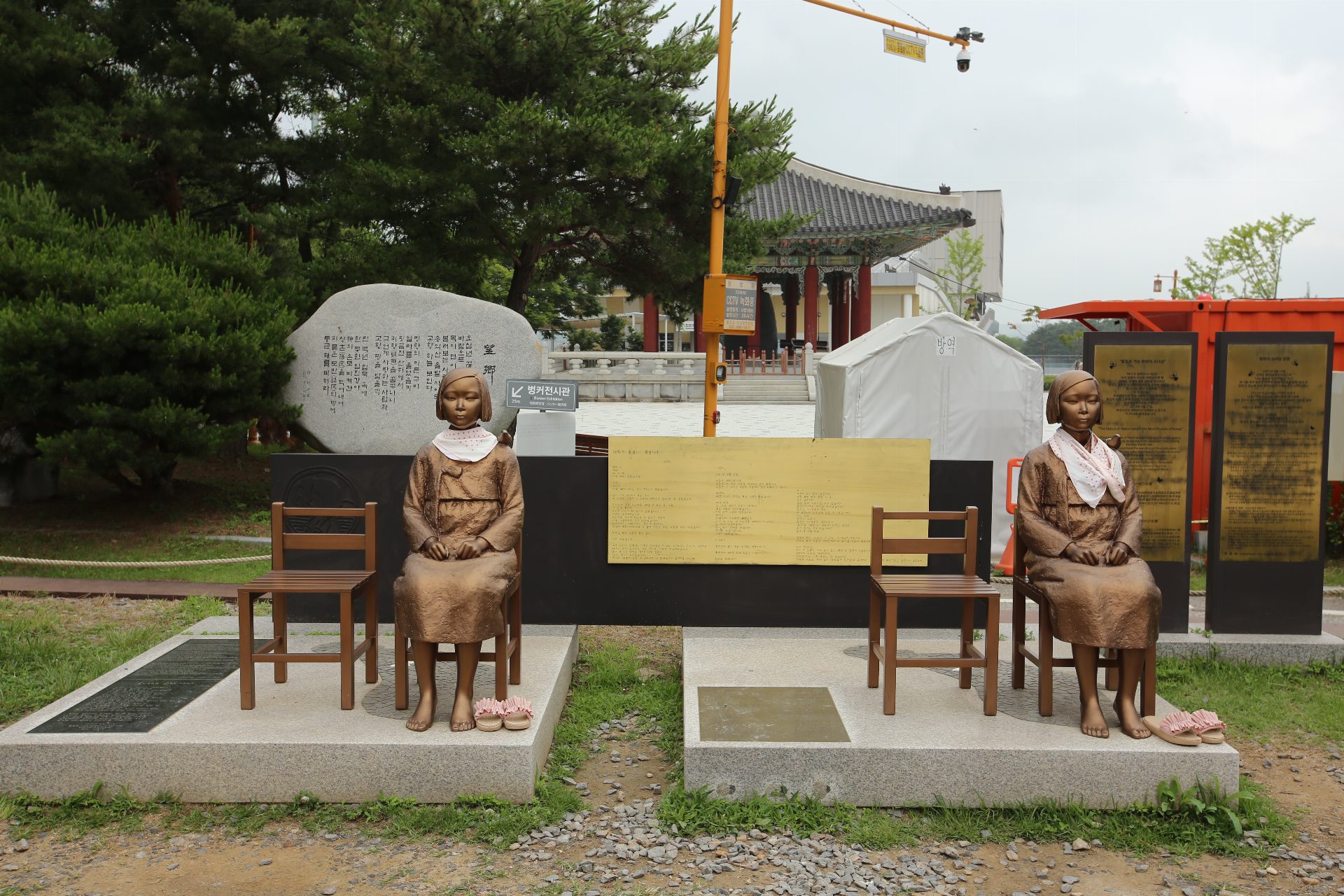
Imjingak Pyeonghwa Nuri Park is a peaceful site near the DMZ, featuring monuments, memorials, and green spaces that honor Korean War history and promote unification. Here you can explore statues, war artifacts, and an outdoor theater. Built in 1972, it was designed to provide support to displaced North Koreans unable to return home.
Bridge of Freedom
The Bridge of Freedom is a historic wooden bridge spanning the Imjin River, where you can walk and view ribbons with unification messages. It symbolizes Korean War repatriation. The bridge was built in 1953 as a temporary structure to allow 12,773 South Korean and UN prisoners of war to cross back over to freedom in the South, while they famously shouted, “Long live freedom!”
Mangbaedan
Mangbaedan is an altar where you can observe rituals and reflect on family separation. Displaced North Koreans perform ancestral rites here, facing toward their hometowns. It consoles the 10 million separated families caused by the Korean War.
Imjin River Dokgae Bridge
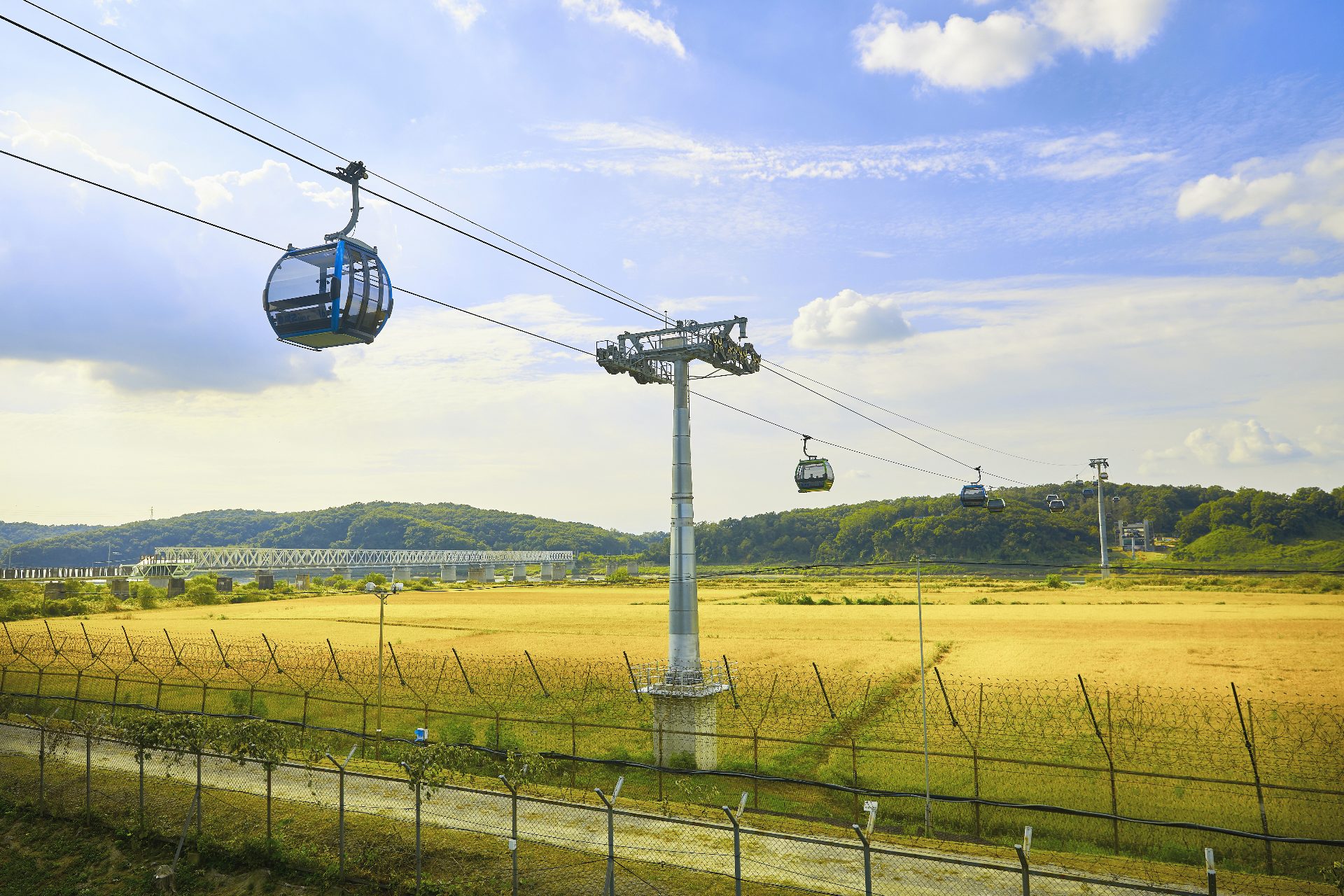
The Imjin River Dokgae Bridge features remnants of a destroyed Korean War railroad bridge. Examine the bullet-marked piers and an optional skywalk experience. Bombed in 1950, only its piers remain as a war relic. This tour doesn’t include a skywalk ticket, although you can purchase one from the kiosk on the day if desired.
Steam Locomotive at Jangdan Station
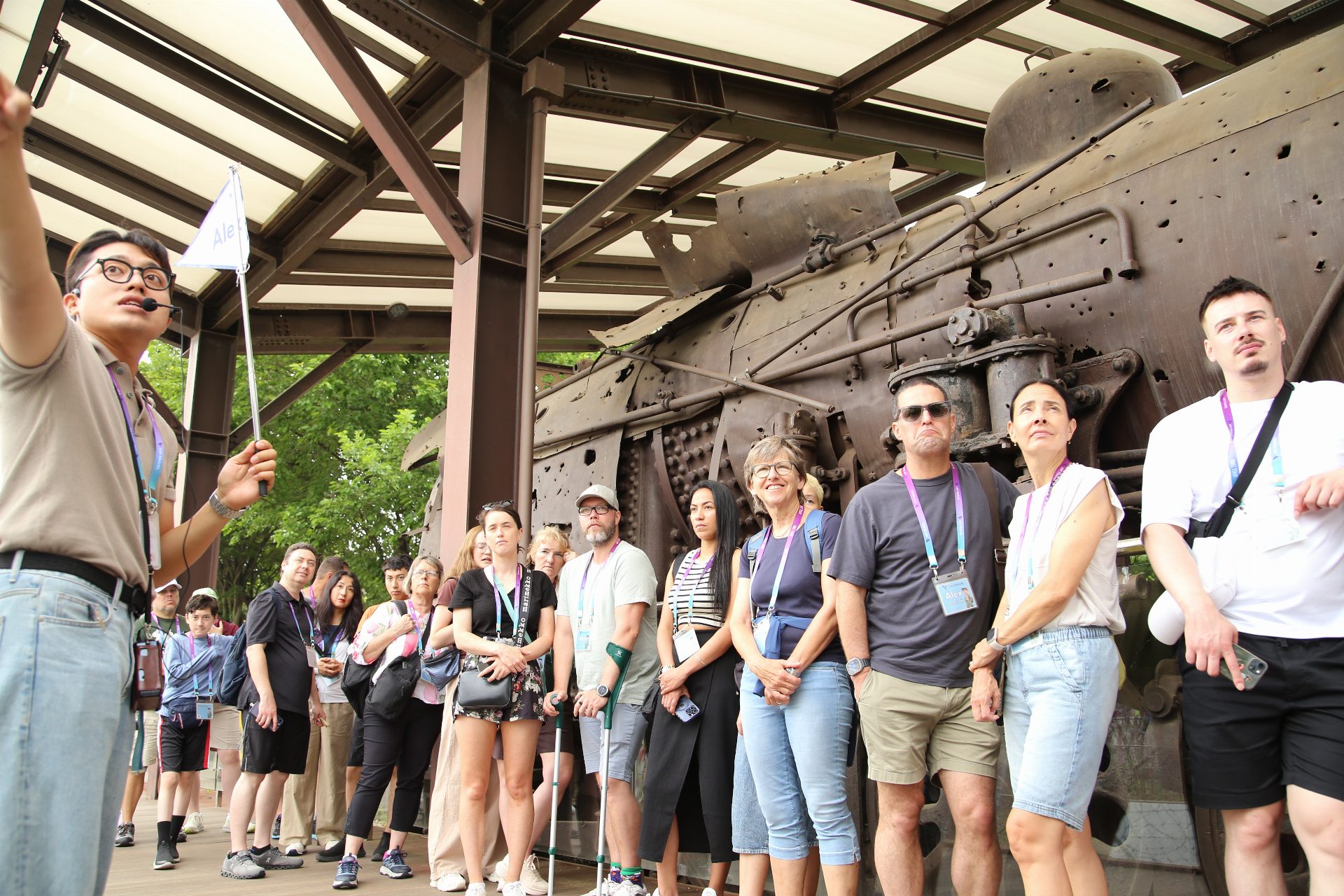
The Steam Locomotive at Jangdan Station is a rusted, bullet-riddled train on display called the Iron Horse. Inspect over 1,000 bullet holes from the Korean War. Derailed by bombs in 1950, it lay abandoned in the DMZ for over 50 years.
Pyeonghwauijong The Peace Bell
Pyeonghwauijong The Peace Bell is a large bell that can be rung for peace. It symbolizes hope for reunification. Built in 2000 for the new millennium, it weighs 21 tons to represent the 21st century.
Unification Bridge
The Unification Bridge also serves as a military checkpoint, leading to restricted sites within the Demilitarized Zone and requiring ID verification to pass. It’s also known as “Cow Bridge” because Hyundai’s founder sent 1,001 cows across it in 1998 to repay a debt incurred during his escape.
The Third Tunnel of Aggression
The Third Tunnel of Aggression is an infiltration tunnel that you can enter wearing a helmet and continue all the way to the third concrete barricade South Korea installed to block the tunnel from a North Korean invasion. Peer through the window of the third concrete barricade to see the second one. Discovered in 1978, it could allow 30,000 North Korean troops to pass through per hour.
DMZ Theater & Exhibition Hall
The DMZ Theater & Exhibition Hall features a short video on the Korean division and exhibits of war relics. You learn more about the DMZ and its history, and you can see genuine artifacts from the war on display. Here you will find a collection of war relics, photographs, artifacts, and documents to provide a broader perspective.
Dora Observatory
Dora Observatory offers binocular views into North Korea. From here, you can see various sites, including the propaganda village with its tall flagpole, Kaesong City, the Kaesong Industrial Complex, Mount Songak, North Korean farmlands and cooperative farms, and, occasionally (weather- and timing-dependent), the Kim Il Sung statue and North Korean civilians and soldiers. So peer across the DMZ for a close-up public glimpse into North Korean daily life.
Tongilchon Jangdankong Maeul
Tongilchon Jangdankong Maeul (Unification Village) is a farming community inside the Civilian Control Zone, known for its soybean products. Here, you can sample local bean curd dishes or purchase soybean ice cream. There is also a local village shop you can pop into if you’d like to pick up a souvenir. The village was also designated as a UN natural preservation zone for its pristine environment.
JSA Museum
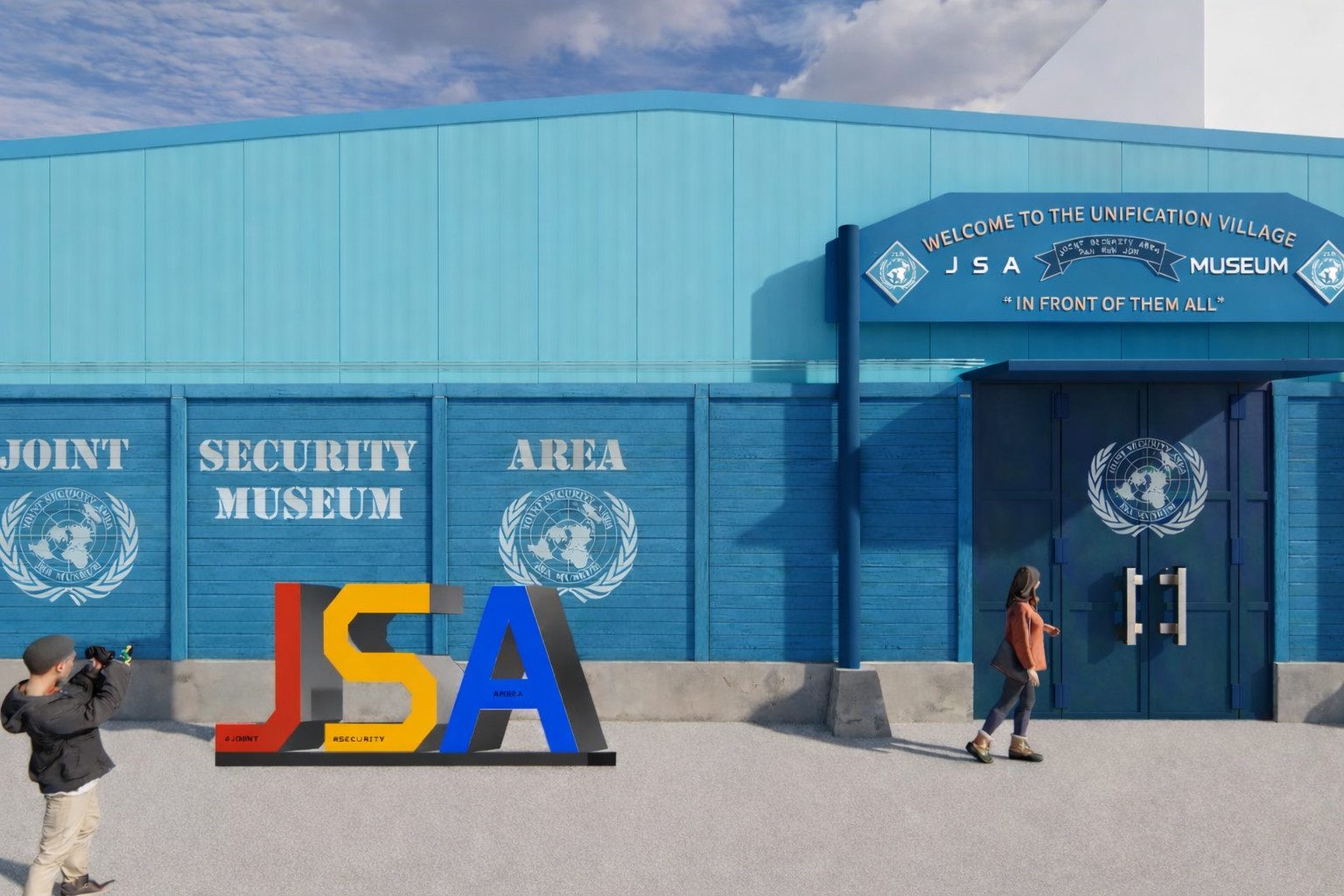
This exclusive JSA Experience at the JSA Museum is available only to our tour guests. As one of just two agencies granted privileged access, you receive unrestricted entry to discover immersive exhibits, rare historical photos, war archives, multimedia displays, and faithfully recreated T2/T3 conference rooms. These elements powerfully revive the dramatic history of Panmunjom and the Joint Security Area. Gain an unmatched, in-depth, interactive understanding unavailable on standard 3rd Tunnel DMZ tours. A unique, exhilarating conclusion found nowhere else.
North Korean Defector Live Talk & Q&A
(Optional) Join an intimate, group-only live session and hear authentic, firsthand stories straight from a North Korean defector. Ask your own questions and gain deeper, personal insights that go well beyond what a standard DMZ tour from Seoul offers. This special experience is essential for a truly memorable and complete visit and to gain a deeper understanding from the North Korean side. Important: You must reserve this option in advance. It cannot be added or upgraded on the day of the tour!
Gamaksan Red Suspension Bridge
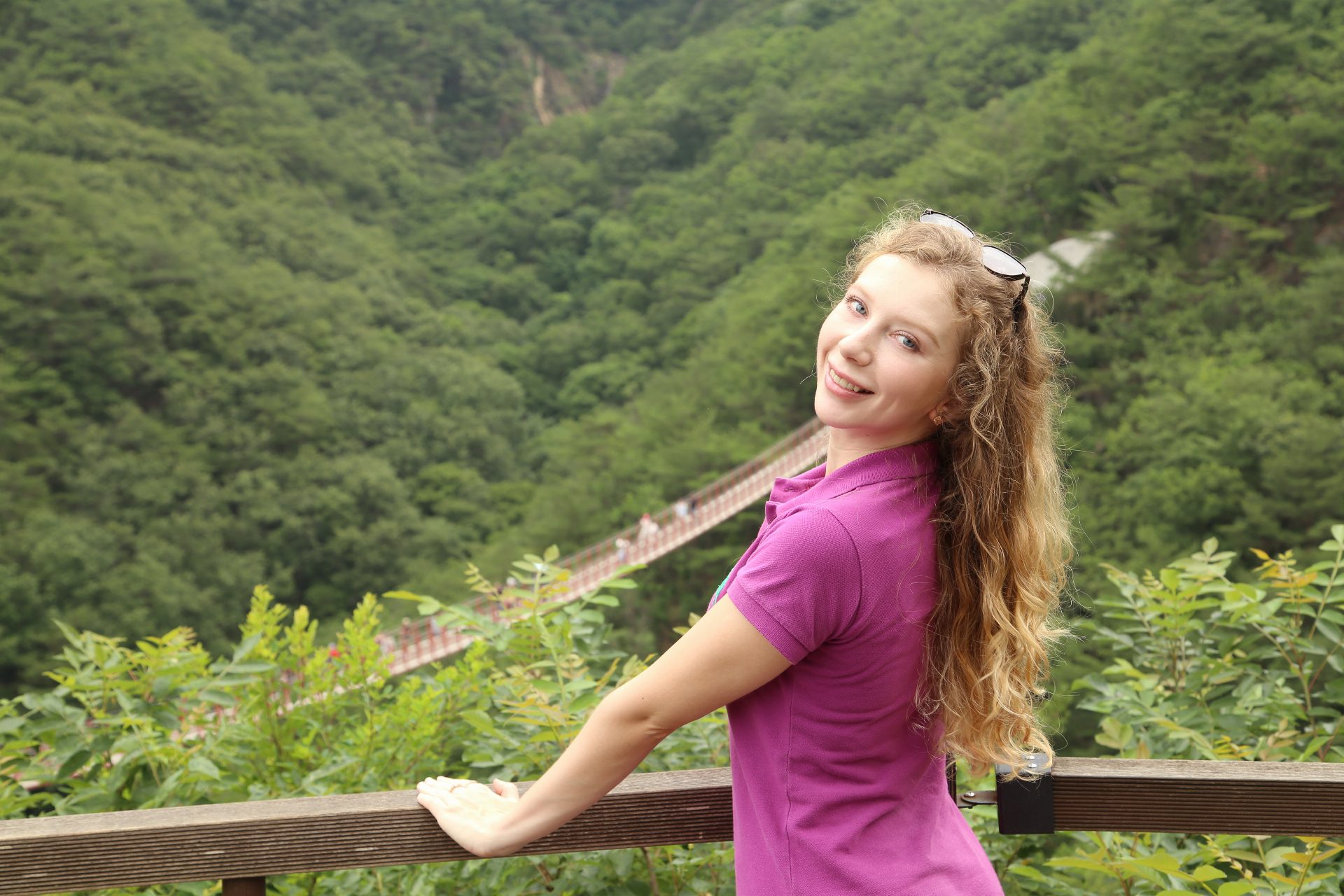
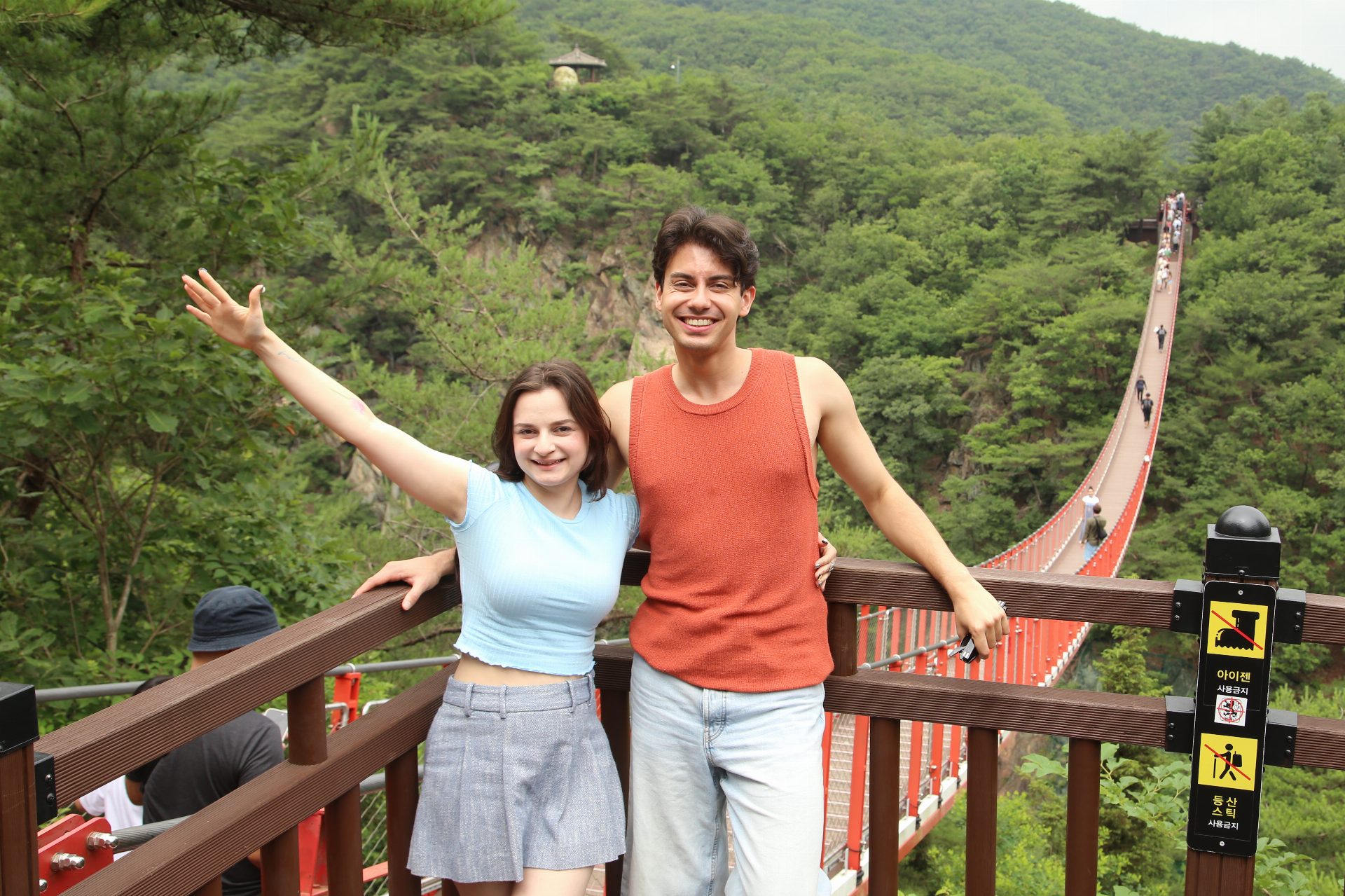
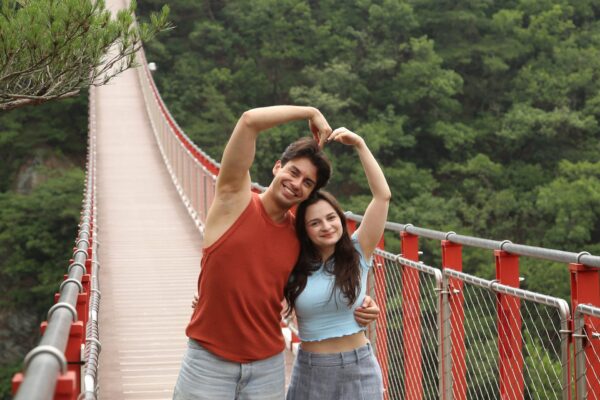
(Optional) Gamaksan Red Suspension Bridge is a 150m-long, towerless pedestrian suspension bridge over Seolmari Valley near the DMZ in Paju. Cross for thrilling wobbles and panoramic mountain views, as a scenic finale on our DMZ tour. Also known as the Gloucester Heroes Bridge, it honors the British Gloucestershire Regiment’s heroic stand against overwhelming Chinese forces during the 1951 Battle of the Imjin River in the Korean War.
Central Seoul Drop-off (Hongdae, Seoul City Hall, Myeongdong)
Alight at one of our drop-off points (Hongdae, Seoul City Hall, or Myeongdong). Located in central Seoul, these locations let you continue to explore, enjoy a delicious meal, or take advantage of the plentiful transportation options at each for easy onward travel.
Myeongdong Subway Station
Meeting Point 1: Myeongdong Subway Station Exit 9, located in front of Sky Park Hotel Ⅲ (3). Please aim to arrive 15 minutes early to account for navigational mishaps.
Seoul City Hall Subway Station
Meeting Point 2: City Hall Subway Station Exit 6. You’ll find Exit 6 located beside the Plaza Hotel. Please try to arrive 15 minutes before your scheduled pickup time.
Cheonggyecheon Stream (Pass By)
Pass by Cheonggyecheon Stream, a revitalized urban waterway in downtown Seoul, where visitors stroll along walking paths and bridges amid greenery and public art. This restored natural stream was famously uncovered from an elevated highway in 2005 as a major urban renewal project.
Jogyesa Temple
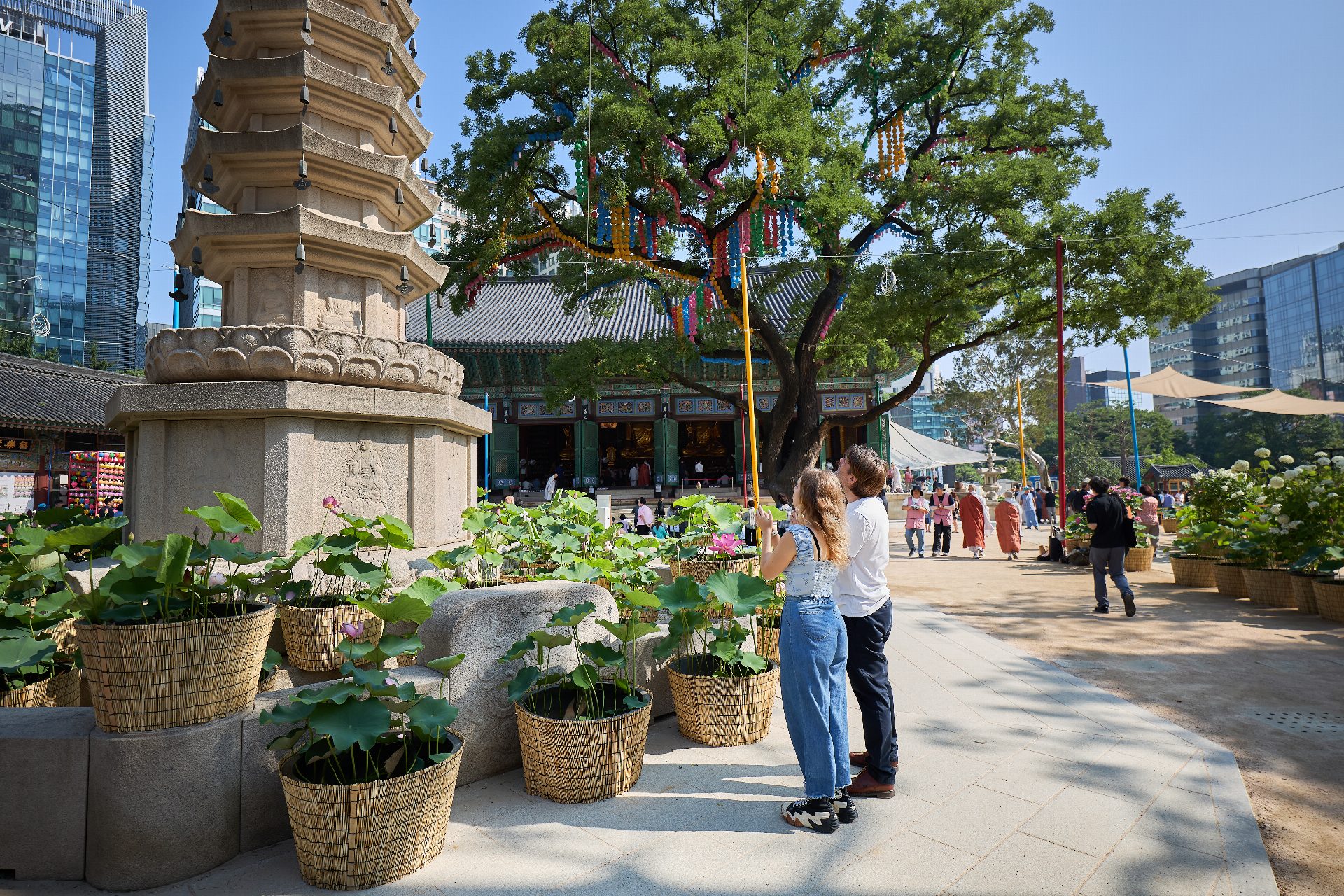
Visit Jogyesa Temple, the chief temple of the Jogye Order of Korean Buddhism, featuring colorful halls, ancient trees, and vibrant rituals. Explore serene grounds and observe Buddhist ceremonies. It became the head temple in 1936 and hosts the famous Lotus Lantern Festival for Buddha’s birthday.
Gwanghwamun Gate (Changing of the Guard)
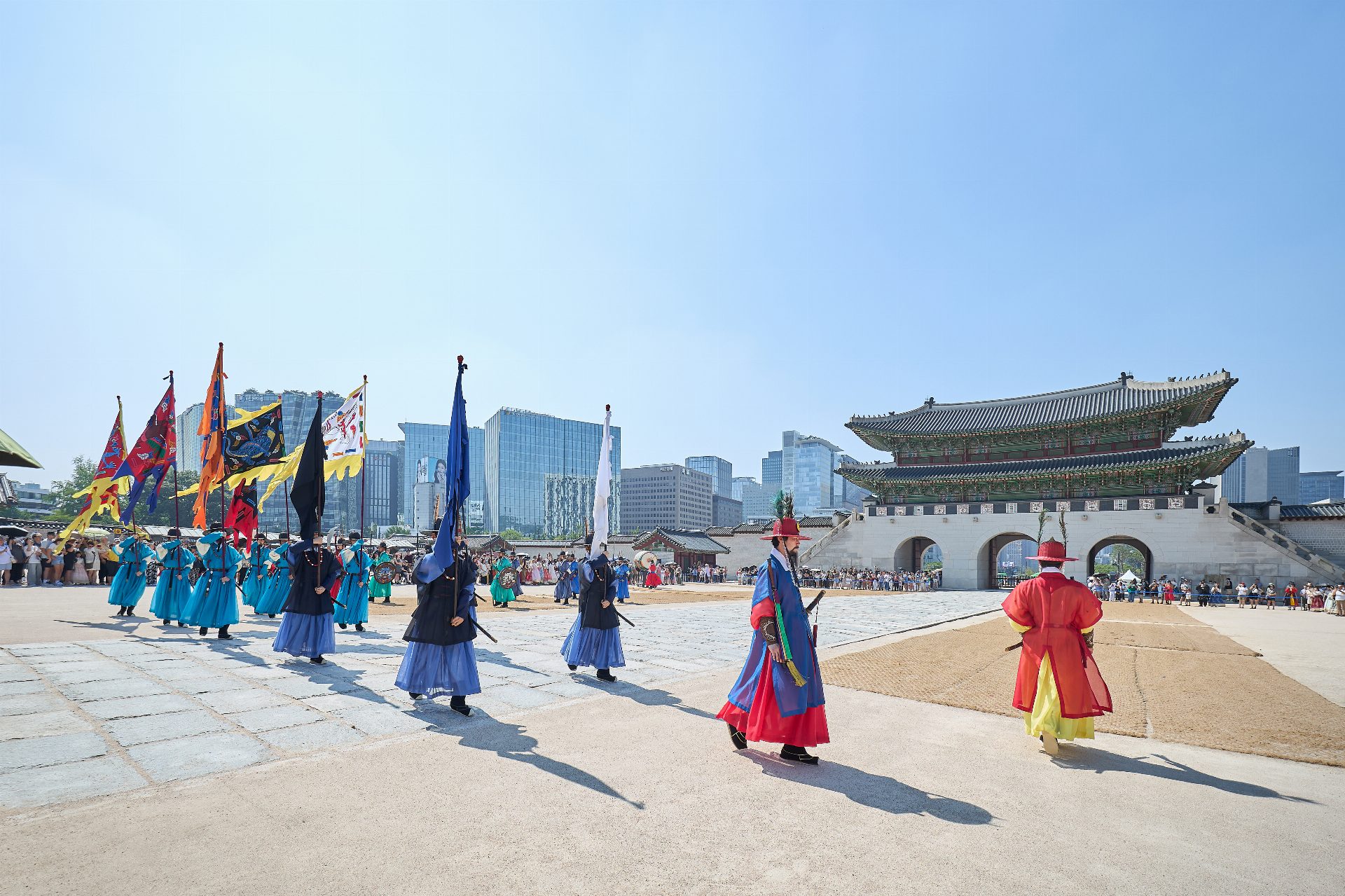
* Note: Every day except Tuesdays. At Gwanghwamun Gate, the grand main entrance to Gyeongbokgung Palace, watch the reenacted Changing of the Guard ceremony with colorful traditional uniforms and music. This ritual reenacts Joseon Dynasty royal security procedures, which have been performed daily since 1996.
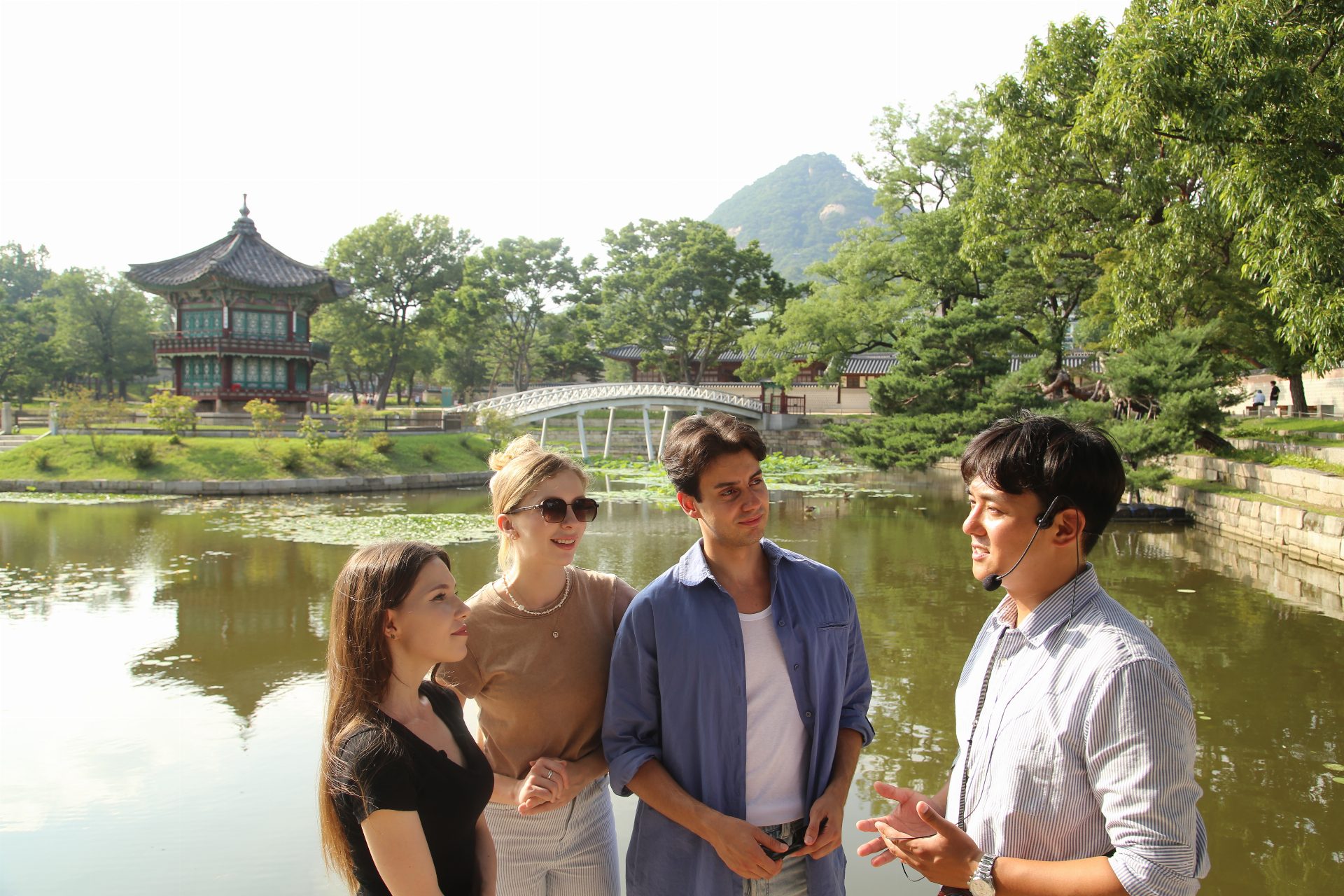
Gyeongbokgung Palace
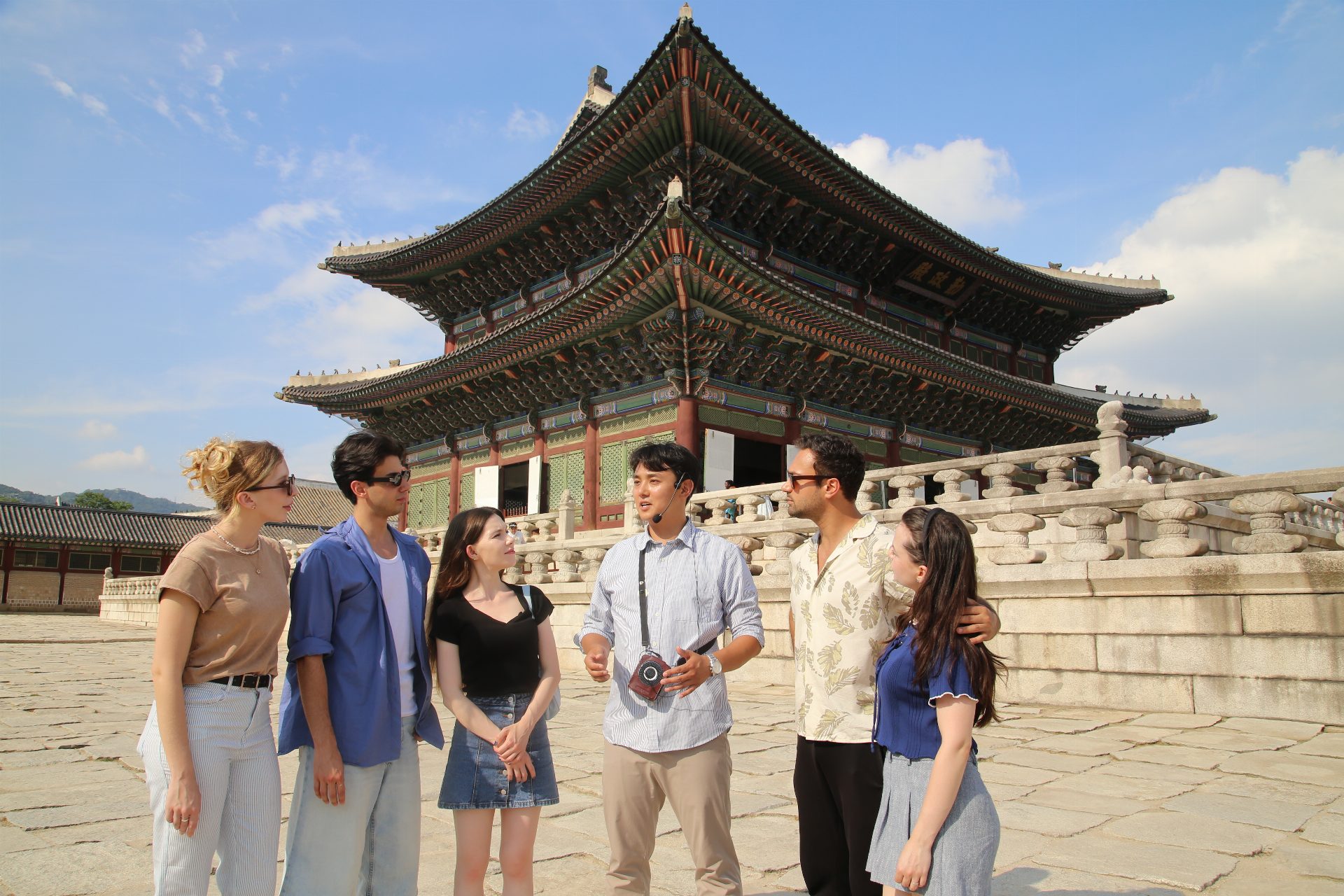
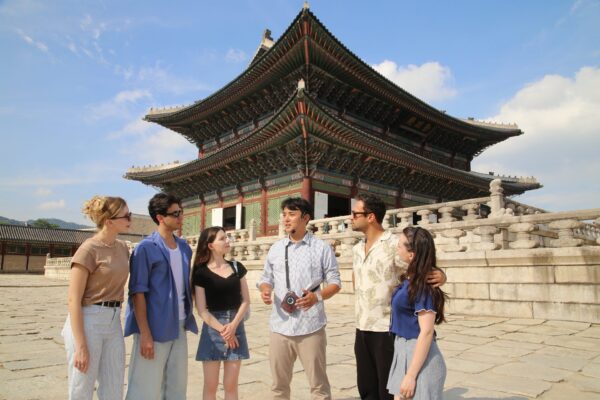
* Note: Every day except Tuesdays. Explore Gyeongbokgung Palace, the largest and most iconic of Seoul’s five grand palaces, built in 1395 as the primary royal residence of the Joseon Dynasty. Admire majestic halls, pavilions, and gardens. It is the most visited tourist site in Seoul.
National Folk Museum of Korea
* Note: Every day except Tuesdays. Discover the National Folk Museum of Korea, located within Gyeongbokgung grounds, showcasing replicas and artifacts of traditional Korean life from prehistoric times through the Joseon era. View exhibits on daily customs, villages, and Confucian influences. It illustrates the history of the Korean people’s way of life.
The Blue House (Pass By)
* Note: Every day except Tuesdays. Pass by the Blue House (Cheong Wa Dae), the former presidential residence known for its distinctive blue tiles covering 150,000 traditional roof pieces. View its elegant architecture and scenic mountain backdrop. It served as the executive office and home from 1948 until 2022.
Changdeokgung Palace
* Note: Tuesdays only! Tour Changdeokgung Palace, a UNESCO World Heritage Site renowned for its harmonious design that blends with the natural topography. Wander serene grounds and pavilions. It served as the preferred residence for many Joseon kings despite being the secondary palace.
Bukchon Hanok Village
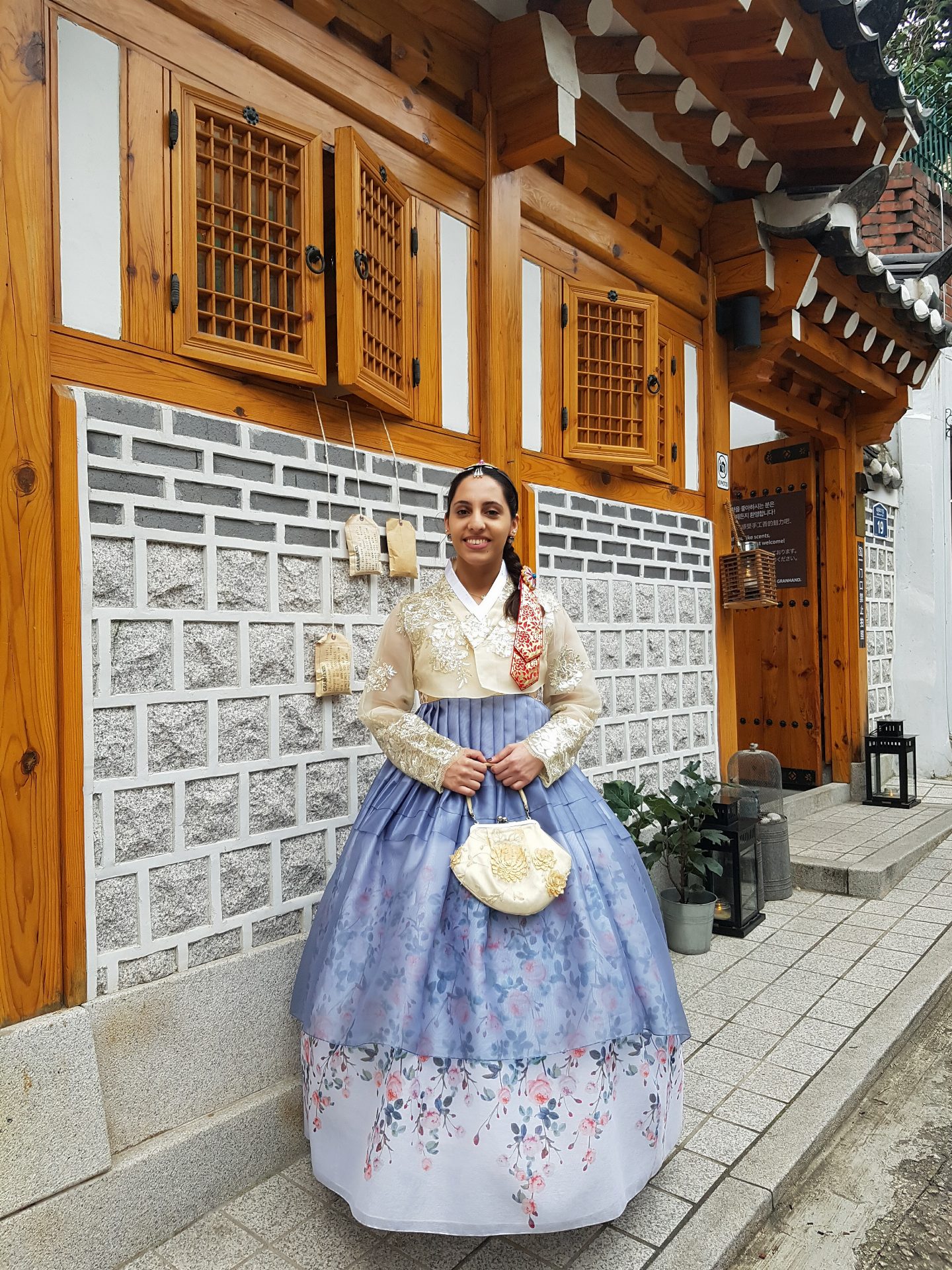
* Note: Tuesday only! Stroll through Bukchon Hanok Village, a preserved neighborhood of over 900 traditional Korean hanok houses from the Joseon Dynasty, nestled between palaces. Enjoy narrow alleys, cultural views, and tea houses. It was historically home to nobility and high officials.
Korea Ginseng Museum
Visit the Korea Ginseng Museum to learn about the history, cultivation, and health benefits of Korean ginseng in traditional medicine through exhibits and tastings. Explore displays on its cultural significance. Korean ginseng is renowned worldwide as a premium herbal remedy.
Insadong
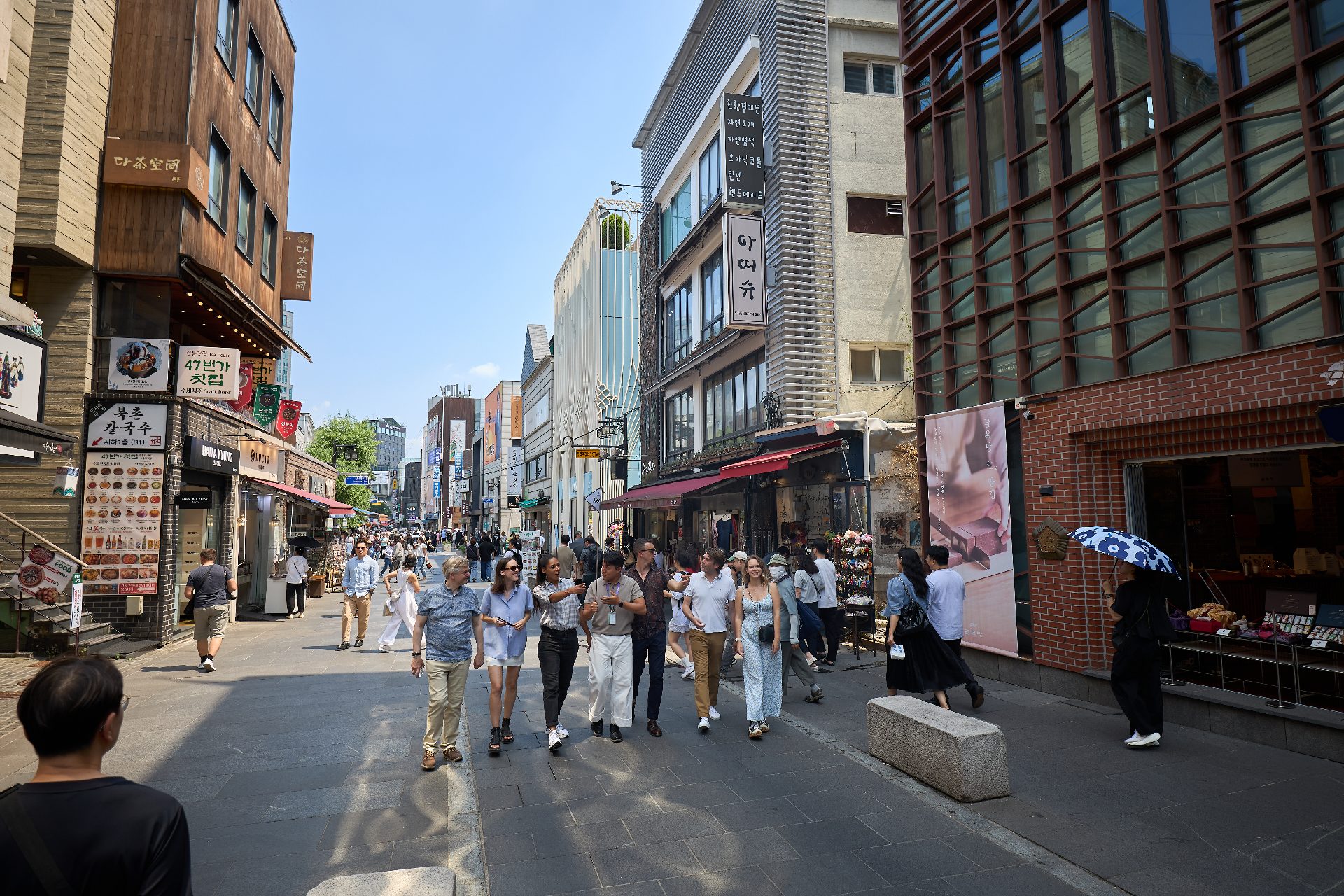
Wander Insadong, a vibrant cultural street lined with art galleries, antique shops, traditional tea houses, and craft stores. Shop for souvenirs and enjoy street performances. All main signs are written exclusively in Hangul, preserving Korean tradition.
Gwangjang Market
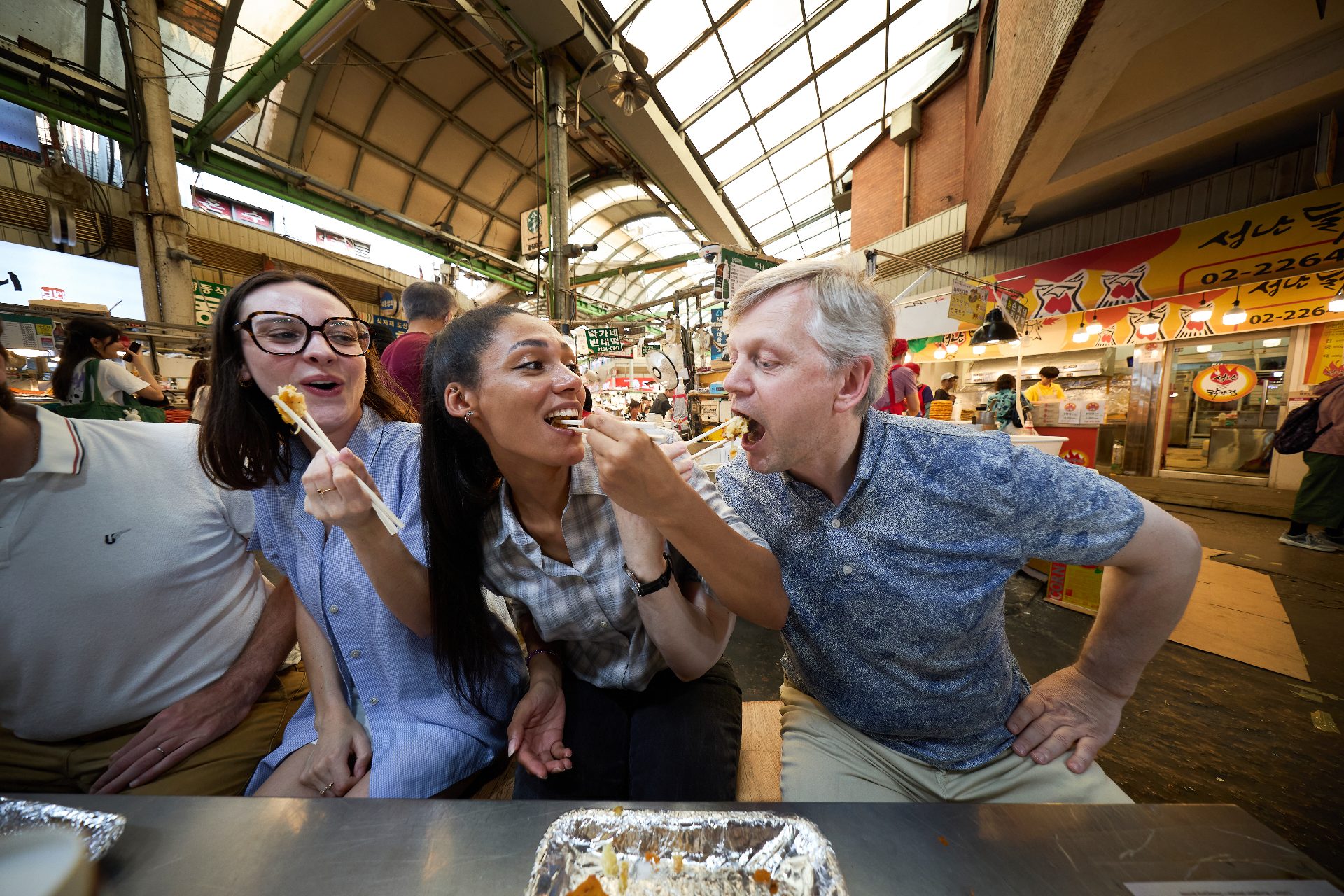
Experience Gwangjang Market, one of Korea’s oldest permanent markets, famous for street food stalls offering mung bean pancakes, bindae-tteok, and more. Taste authentic Korean snacks amid bustling aisles. Established in 1905 by Korean investors to counter Japanese control of markets.
Namsangol Hanok Village
Step into Namsangol Hanok Village, featuring five restored Joseon-era hanok houses once owned by aristocrats, along with traditional gardens and possible cultural performances (schedule-dependent). A time capsule was buried here in 1994, marking Seoul’s 600th anniversary, to be opened in 2394.
Namsan Cable Car
Ride the Namsan Cable Car for panoramic views ascending Namsan Mountain to the tower. Enjoy the scenic aerial journey over greenery. Operational since 1962, it spans 605 meters and features an elevation gain of 138 meters.
N Seoul Tower
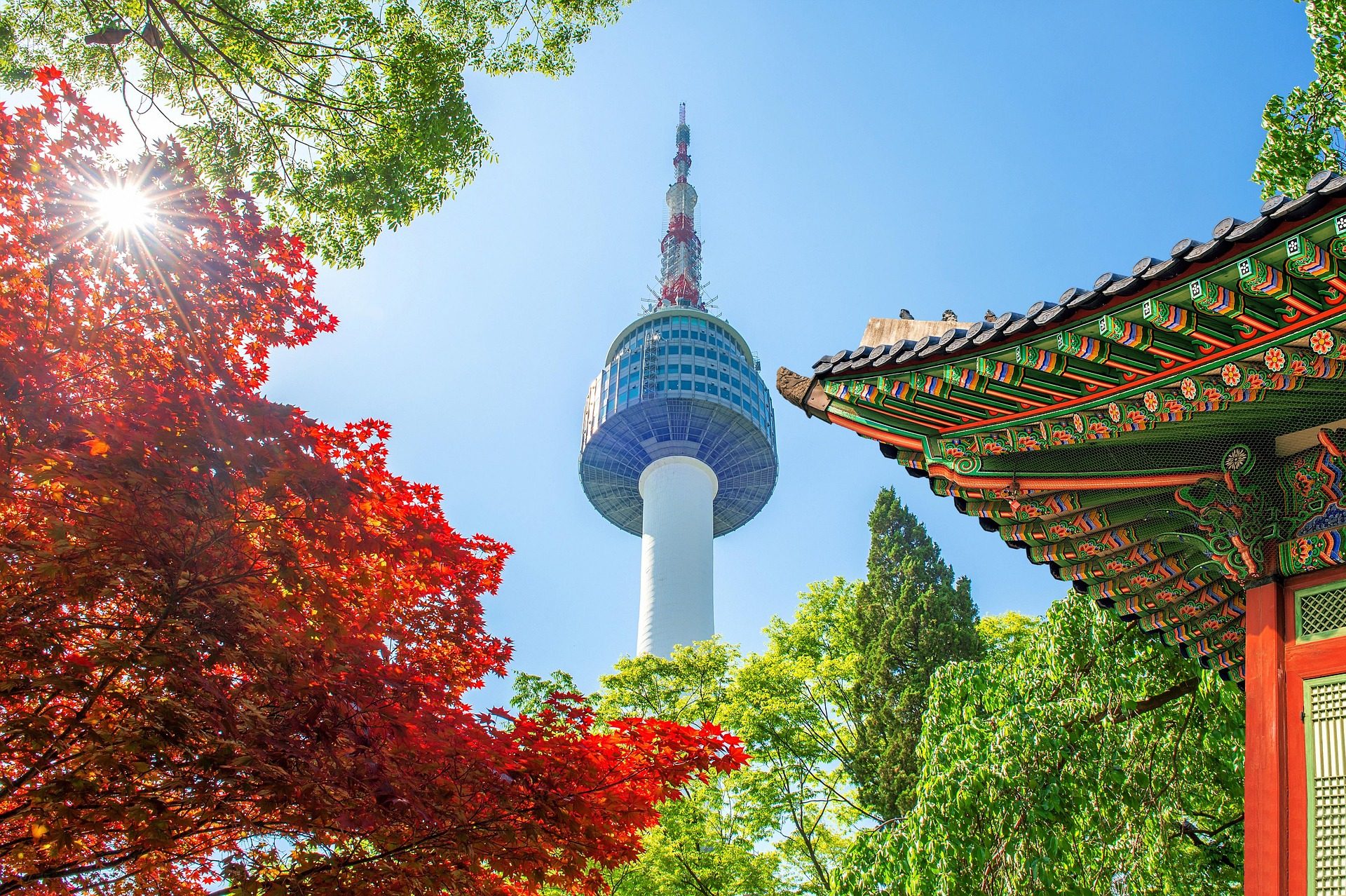
Admire North Seoul Tower on Namsan Mountain, Seoul’s iconic landmark with its distinctive antenna and illuminated structure, offering some of Seoul’s best panoramic city views. Enjoy the surrounding park and mountain scenery. Built in 1969 as Korea’s first general radio wave tower, it opened to the public in 1980.
Myeongdong Shopping Street
Drop-off location 1: Neon-lit beauty paradise where K-pop blasts from every corner. Fun fact: Myeongdong sells more cosmetics per square meter than anywhere else on Earth. Drop off here to shop at 300+ stores, devour street food carts (lobster skewers, anyone?), and join the famous late-night skincare-haul crowds that keep going until midnight.
Namdaemun Market
Drop-off location 2: Korea’s oldest (600+ years) and biggest traditional market with 10,000 stalls open until dawn. Fun fact: You can buy everything from hanbok to hiking gear to a live eel here. Perfect drop-off for bargain hunting, hot mandu dumplings, and endless night market energy.
Seoul City Hall
Drop-off location 3: Iconic glass building with a vertical garden wall taller than a 10-story building (made of 70,000 plants!). Drop off here for stunning night photos of the wave-shaped facade, grab craft beer or coffee at the trendy cafes inside, or stroll 3 minutes to Deoksugung Palace and romantic Jeongdong-gil gingko tree lane.
Tour Info
Includes
Professional Licensed Tour Guide (English or Chinese)
Transportation
Entrance Fees & Taxes
Gamaksan Red Suspension Bridge (only if selected during checkout)
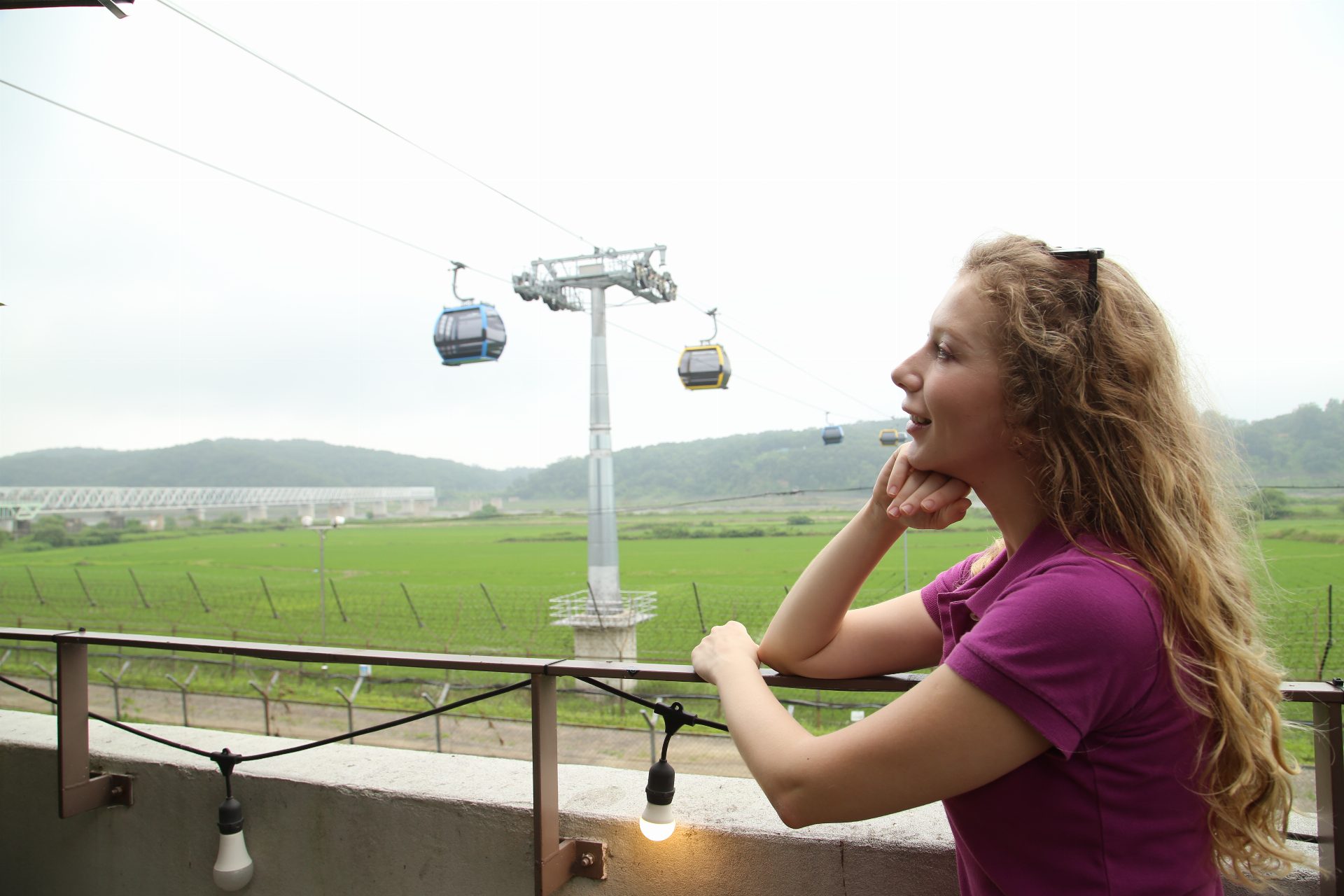
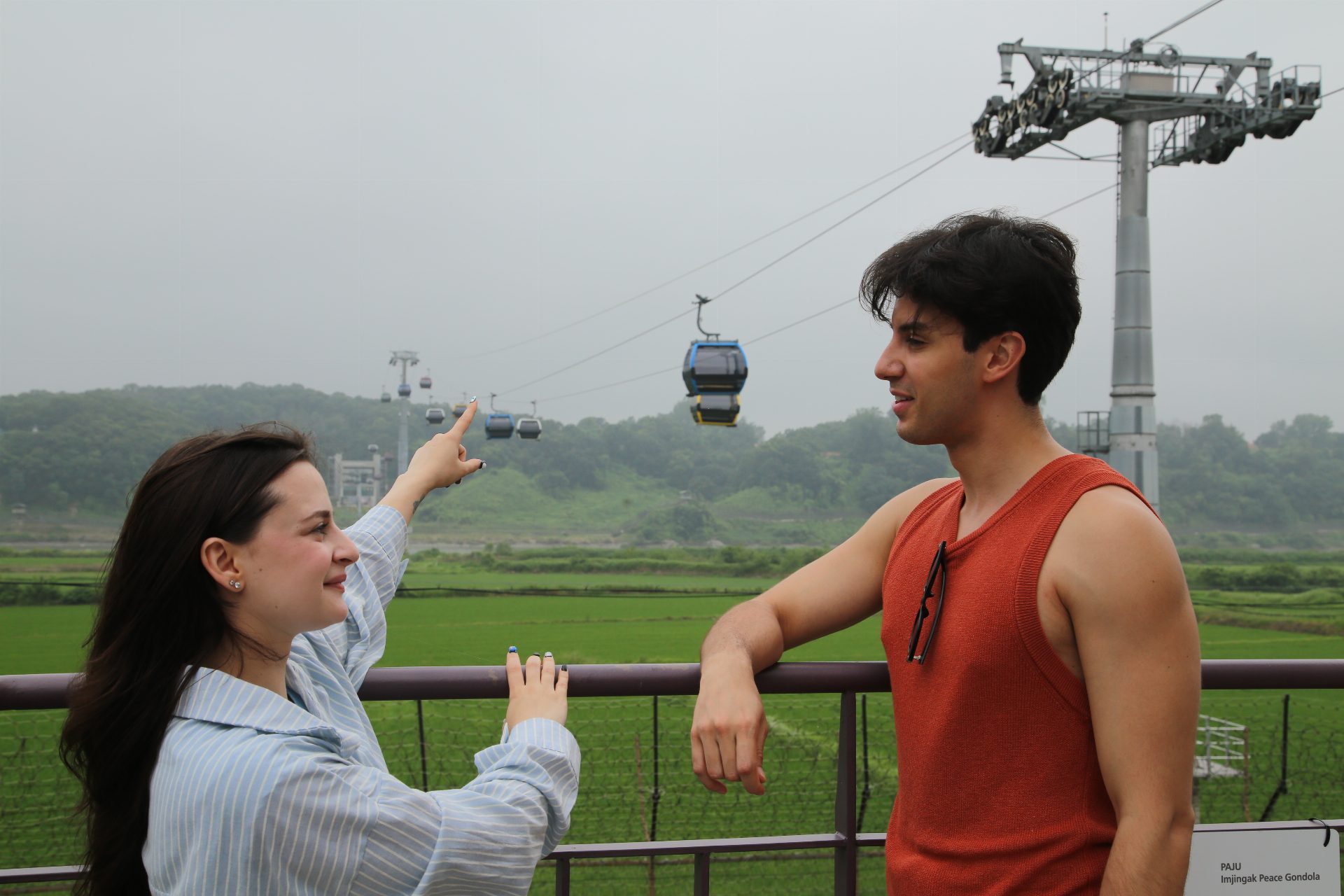
DMZ Gondola (only if selected during checkout)
Namsan Cable Car Round Trip
Excludes
Meals/Food/Snacks
Drinks/Beverages
Additional Notes
Passport is required (You cannot enter without a passport)
Stroller accessible
Infants must sit on laps
Not wheelchair accessible
Tour Highlights and USP

Dia says…
Our ultimate crowd pleaser and best deal! If you are looking for comfort, convenience, and effortless efficiency while checking off your Korea bucket list, this tour is for you. This tour combines our Signature DMZ Third Tunnel Tour and our Complete Seoul City Sightseeing Tour. Perfect for first-time visitors to Korea, it covers the No. 1 activity in Korea and the main points of interest in Seoul. It’s suitable for everyone, from solo travelers to couples, families, and groups.
Free Cancellation 24hrs Before Tour
Requirements
A passport is required to enter the DMZ (ARC & Military ID also accepted)! You will be refused entry at military checkpoints without it!
Who is it for
Everyone: Solo Travellers, Couples, Families & Friends (no age limit).
Seeking the complete DMZ experience
Check off the top highlights in Seoul
Visit the Third Infiltration Tunnel.
Get local knowledge, insights and a sense of direction
Book TourRecommended
Related Tours
Best Seller
DMZ Third Tunnel Tour from Seoul + Exclusive JSA Experience Museum
Popular
Aegibong Tour: Closest Lookout to North Korea
The Complete Seoul City Sightseeing Tour