
Almost everyone who books a tour with me knows that Korea is divided. What surprises them is how it happened. They assume it was some ancient rivalry, two peoples who never got along. The truth is far more recent, far more accidental, and honestly, far more heartbreaking.
This isn’t distant history. It’s living memory. There are Koreans alive today who remember a single, undivided country, and families who were torn apart and never saw one another again. So let me tell you the story of how one Korea became two, from the beginning right up to the present day.
One Korea: A Unified People
Here’s the first thing I want you to understand. For most of its long history, Korea was a single, unified nation. One people, one language, one shared culture stretching back well over a thousand years.
That matters, because it means the division you see today is not natural or ancient. It’s a modern wound, inflicted within living memory. When Koreans talk about reunification, they’re not dreaming of merging two different peoples. They’re longing to heal one people who were split apart.
Japanese Colonial Rule (1910–1945)
The story of division really begins with occupation. In 1910, Korea was annexed by Imperial Japan and lost its independence entirely. For the next thirty-five years, Koreans lived under harsh colonial rule that sought to suppress their language, culture, and identity.
It was a painful chapter, and its ending set the stage for everything that followed. When Japan was defeated at the close of the Second World War in 1945, Korea was suddenly liberated, but it was also left without a government of its own and caught between the two great powers now shaping the postwar world.
The Fateful Line: The 38th Parallel (1945)
This is the moment that changed everything, and it happened astonishingly fast.
As the Second World War ended in 1945, the United States and the Soviet Union agreed to temporarily divide the Korean Peninsula to manage the Japanese surrender. The Americans would oversee the south, the Soviets the north. The dividing line they chose was the 38th parallel.
Here’s the detail that stuns my guests every time. That line was drawn in a hurry. It’s widely recounted that two young American officers, working late one night with a map, selected the 38th parallel largely because it split the country roughly in half and kept the capital, Seoul, on the American side. A decision made in a matter of hours would go on to shape the fate of millions.
And it was only ever meant to be temporary. But as Cold War tensions hardened between the US and the Soviet Union, that temporary line began to look permanent. Neither side was willing to hand the whole peninsula to the other.
Two Governments, Two Ideologies (1948)
By 1948, the split had become official. In the south, the Republic of Korea was established, backed by the United States and built on democracy and capitalism. In the north, the Democratic People’s Republic of Korea was formed under Soviet influence, founded on communism.
Now there were two rival governments, each claiming to be the one true Korea, staring at each other across that 38th parallel. Two systems, two ideologies, one deeply divided people. The stage was set for catastrophe.
The Korean War (1950–1953)
On June 25, 1950, North Korean forces launched a surprise invasion across the 38th parallel, pouring into the south. The Korean War had begun.
What followed were three brutal years that swung violently back and forth across the peninsula. At first the North pushed south almost to the very tip of the country. Then a US-led United Nations force intervened and drove the North back, advancing far into the north instead. When it looked as though the war might end there, China entered on the side of the North, sending huge numbers of troops and pushing the front lines back down again. Eventually the fighting ground to a bloody stalemate near where it had all started.
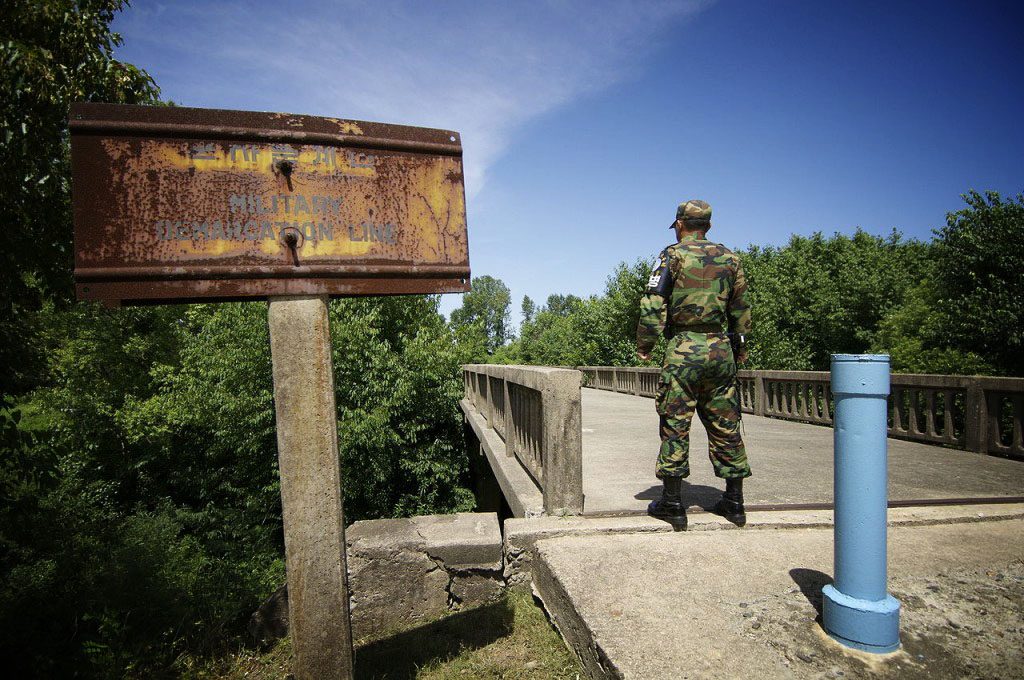
On July 27, 1953, an Armistice Agreement was signed, halting the fighting and creating the Demilitarized Zone, the buffer that still separates the two Koreas today. But here’s the crucial part: it was a ceasefire, not a peace treaty. Technically, the two Koreas remain at war to this very day.
The human cost was staggering. Millions died, and countless families were separated across the new border, many of them forever. That grief still lingers in Korean hearts.
A Divided Peninsula Today
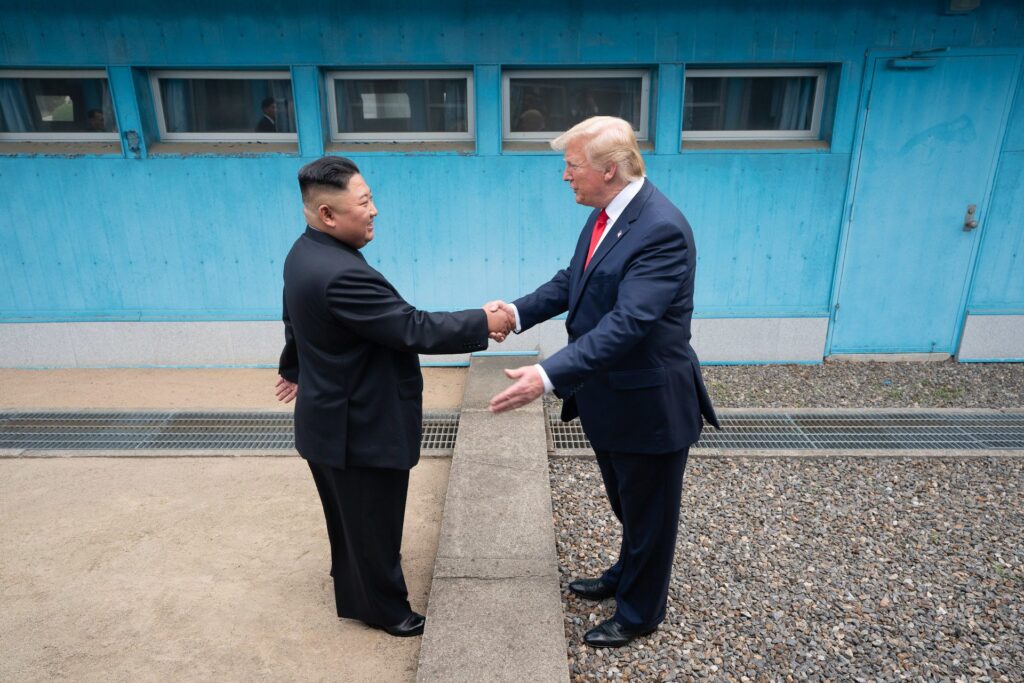
Fast forward more than seventy years, and the contrast between the two Koreas could hardly be starker. The South grew into a global economic and cultural powerhouse, while the North became one of the most isolated and secretive nations on earth. Two paths, from a single shared starting point.
And the DMZ remains, a physical scar running across the land. Families are still separated, the division endures, and reunification remains an unfulfilled hope. When you stand at the border, you’re not looking at a museum piece. You’re looking at an unfinished story.
Why This History Still Matters
I always tell my guests that understanding this history transforms the entire DMZ experience. Without it, the fences and watchtowers are just fences and watchtowers. With it, every detail suddenly carries weight.
For Koreans, this is deeply personal. It’s about grandparents, hometowns, and relatives on the other side of a line no one truly chose. Knowing the story lets you feel the DMZ, not just see it.
Come and Walk The History of the DMZ
Reading about Korea’s division is one thing. Standing where it physically happened is another entirely. When you look out across the border, knowing how a hasty line on a map became a wall between a people, the emotion of it hits differently.
That’s exactly what we’ll share on our DMZ Third Tunnel Tour with the JSA Experience. Together we’ll trace this history from the divided land itself, and you’ll come away understanding Korea in a way no textbook can offer. We’d be honored to show you the real story. Come explore the DMZ with us at DGO Travel.