
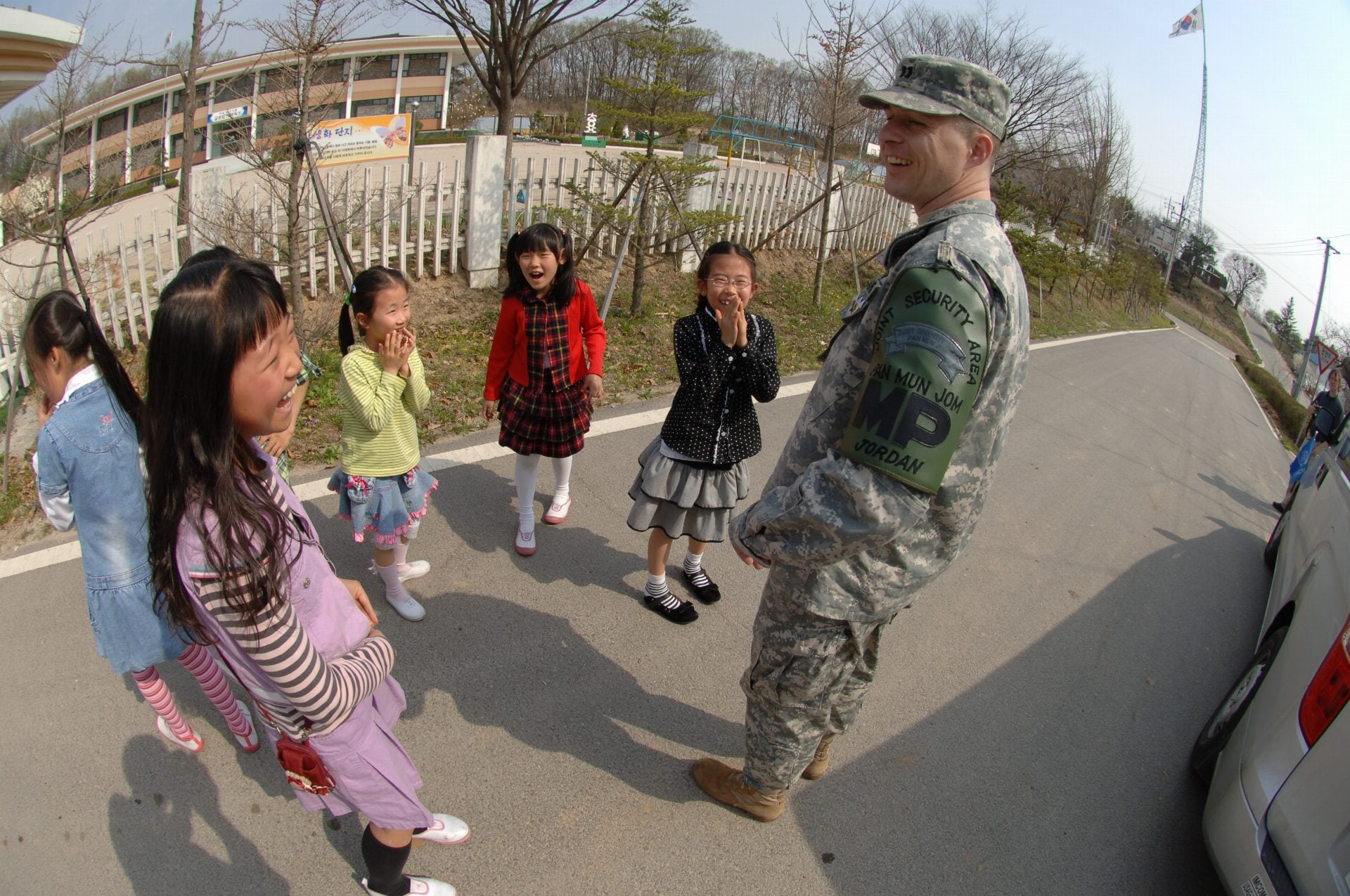
Let me ask you something that surprises almost every traveler I meet. Did you know that people actually live inside the DMZ? Not soldiers, not guards, but ordinary families. Farmers who wake up, tend their rice fields, and go to sleep each night inside the most heavily fortified border on earth.
It sounds impossible, but it’s true. The village is called Daeseong-dong, better known as Freedom Village, and its story is one of the most fascinating parts of the entire DMZ. Let me tell you what life is really like there.
Wait, People Live Inside the DMZ?
Yes, they genuinely do. Daeseong-dong is a real, inhabited farming village located inside the Demilitarized Zone on the South Korean side of the border.
And it’s not alone. Directly across the Military Demarcation Line sits its northern counterpart, Kijong-dong, often called the “Propaganda Village.” Both villages exist because of the 1953 Armistice Agreement, which permitted each side to maintain a single village within the DMZ. So these two settlements have stared across the line at one another for over seventy years, two very different visions of life sitting just a couple of kilometers apart.
The Story Behind Freedom Village
Daeseong-dong’s roots stretch back to the aftermath of the Korean War. When the Armistice was signed in 1953 and the DMZ was drawn, this small community found itself inside the buffer zone, and it was allowed to remain.
The name “Freedom Village” is no accident. It was meant to stand as a symbol, a living, breathing statement that ordinary South Korean life could continue even here, right up against the border. Where the North built its village largely for show, the South kept a real, working community alive. That symbolism still matters today.
Daily Life Under Extraordinary Rules
Living in Freedom Village comes with privileges most Koreans can only dream of, and restrictions almost no one else has to follow.
On the upside, residents are exempt from paying certain taxes, and the men are exempt from South Korea’s otherwise mandatory military service. The farmland is generous and fertile, and the rice and beans grown here have a reputation for quality.
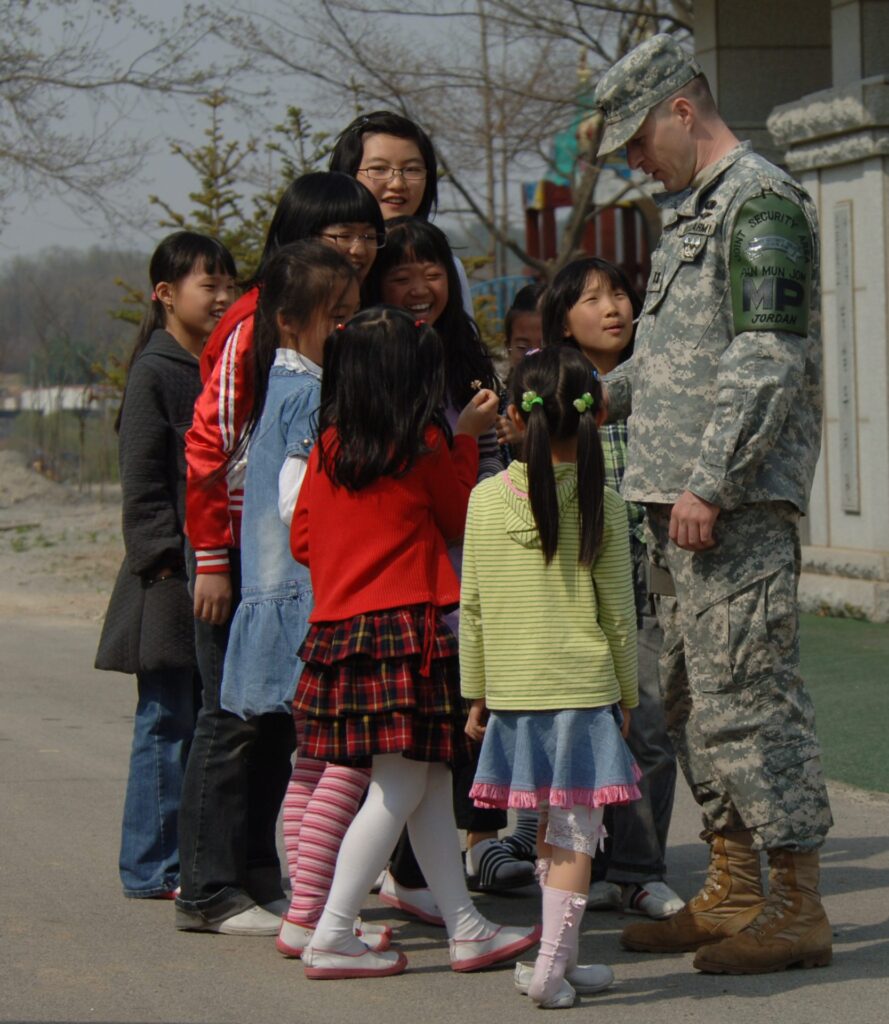
But those benefits come at a price. Residency is tightly controlled. To keep their status, villagers must spend a required number of nights in the village each year, so this cannot simply be a second home. There’s a strict curfew, and headcounts are taken to make sure everyone is accounted for. Farmers heading out to fields near the border are often accompanied by military escorts, and daily life unfolds against a backdrop of checkpoints, fences, and soldiers. Imagine tending your crops while armed guards keep watch and the North stands quite literally within view. For the people of Daeseong-dong, that isn’t a dramatic story. It’s just Tuesday.
The Battle of the Flagpoles
Now here’s my favorite part, because it captures the strange spirit of the Cold War perfectly.
For years, Daeseong-dong and Kijong-dong were locked in what can only be described as a flagpole rivalry. The South raised a tall flagpole flying the South Korean flag. Not to be outdone, the North responded by building a taller one. The South went higher, the North went higher still, and this escalation continued until the North Korean flagpole in Kijong-dong ended up as one of the tallest in the world, hoisting an enormous flag so heavy it reportedly struggled to fly in anything but strong wind.
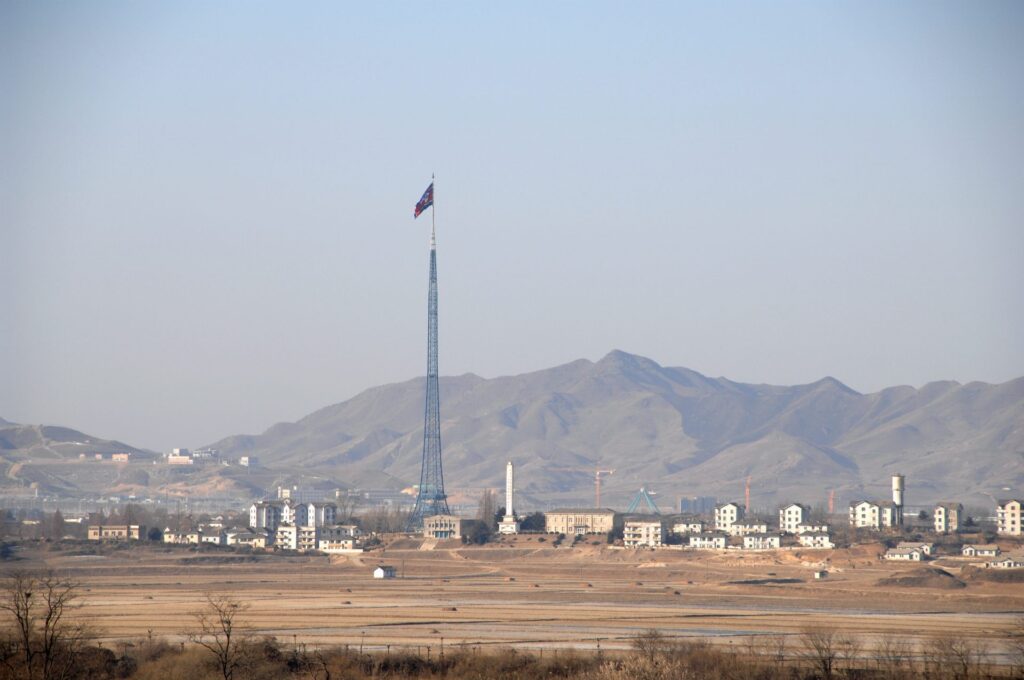
It would be almost comical if it weren’t such a perfect snapshot of the tension between the two nations. Even the sky above the border became something to compete over.
Kijong-dong: The Village Across the Line
Speaking of the North’s village, Kijong-dong deserves a mention of its own. From the South, it looks like a tidy settlement of colorful buildings. But for decades it has been widely regarded as a “Propaganda Village,” built to project an image of prosperity across the border rather than to house a thriving community. Observers have long noted signs suggesting many of the buildings may be largely empty shells.
The contrast says everything. On one side, a genuine village where real families farm and live. On the other, a carefully staged picture. Standing at a viewpoint and seeing both at once is a lesson in the divided peninsula that no textbook can match.
Can You Visit Freedom Village?
Now, the question I always get: can I actually go into Freedom Village? The honest answer is no. Daeseong-dong is a residents-only community, tightly restricted for security reasons, so there’s no general tourism inside the village itself.
But here’s the good news. On our tour, you can see Daeseong-dong with your own eyes from Dora Observatory. From there, you can look out across the border and spot the famous flagpole and some of the village buildings, along with a sweeping view into North Korea beyond. It’s the closest you can get, and standing at that railing, taking it all in, is genuinely unforgettable.
Come See It With Me
There’s something deeply moving about Freedom Village. In the middle of the world’s most fortified border, ordinary life simply carries on. Rice is planted, children grow up, families endure. It’s a quiet act of resilience, and it tells you more about the Korean story than any statistic ever could.
I’d love to show it to you in person. Our Third Tunnel DMZ Tour with the JSA Museum Experience takes you to Dora Observatory for that unforgettable view across to Daeseong-dong, and so much more. Come explore the real, living story of the DMZ with DGO Travel.