
If I had a dollar for every time someone asked me this question, I could retire early on a private island somewhere nice. “Is Panmunjom the same as the Joint Security Area (JSA)? Are they two different places? Which one do I actually visit?” It’s easily one of the most common things travelers ask, and honestly, it’s a completely fair question. Even seasoned visitors and international news reports mix these two terms up all the time.
So let me clear it up for you once and for all. Once you understand the difference, the whole story of the Korean border suddenly clicks into place.
The Short Answer
Here it is in one breath. Panmunjom is the historic area, and the JSA is the specific secured zone where political dialogue takes place today.
Think of Panmunjom as the wider location, the famous truce village where the Korean War was brought to a halt. The Joint Security Area, or JSA, is the tightly controlled space located around 800m to 1km away where soldiers from North and South actually stand face-to-face. They’re deeply connected, but they’re not quite the same thing. Let me unpack it properly.
What Is Panmunjom?
Panmunjom is where the story begins. It was the original truce village, the site where negotiators hammered out the Armistice that ended the fighting of the Korean War on July 27, 1953. For that reason, the name carries enormous historical weight. When people talk about “the place where the war stopped,” they’re talking about Panmunjom.
Here’s a detail that surprises many of my guests, though. The original village of Panmunjom no longer exists as it once did. Today, when people say “Panmunjom,” they’re generally referring to the broader area and location associated with that history, rather than a bustling village you can walk through. It’s less a single spot on a map and more a name that represents the heart of the truce.
What Is the JSA (Joint Security Area)?
The Joint Security Area is the living, active part of that story. It’s the specific secured zone, located near the original Panmunjom village, where North and South Korea meet directly today.
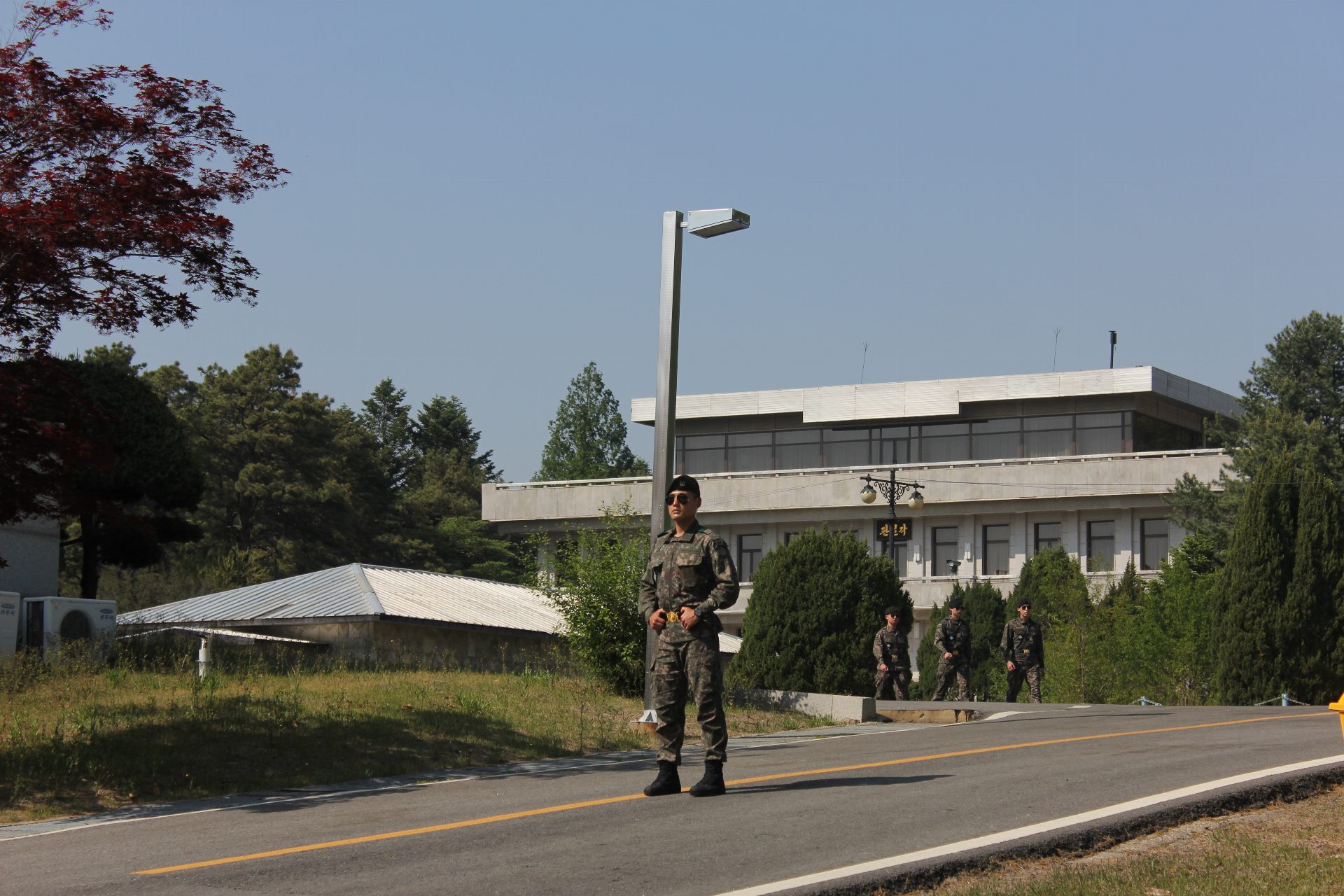
This is where you’ll find the famous pale blue conference buildings, the Military Armistice Commission rooms, built right on top of the Military Demarcation Line that separates the two nations. It’s the only place along the entire border where soldiers from both sides stand within sight of one another. If you’ve ever seen a photograph of a South Korean soldier standing rigid in front of a blue building, or two leaders shaking hands across a low concrete line, you’ve seen the JSA.
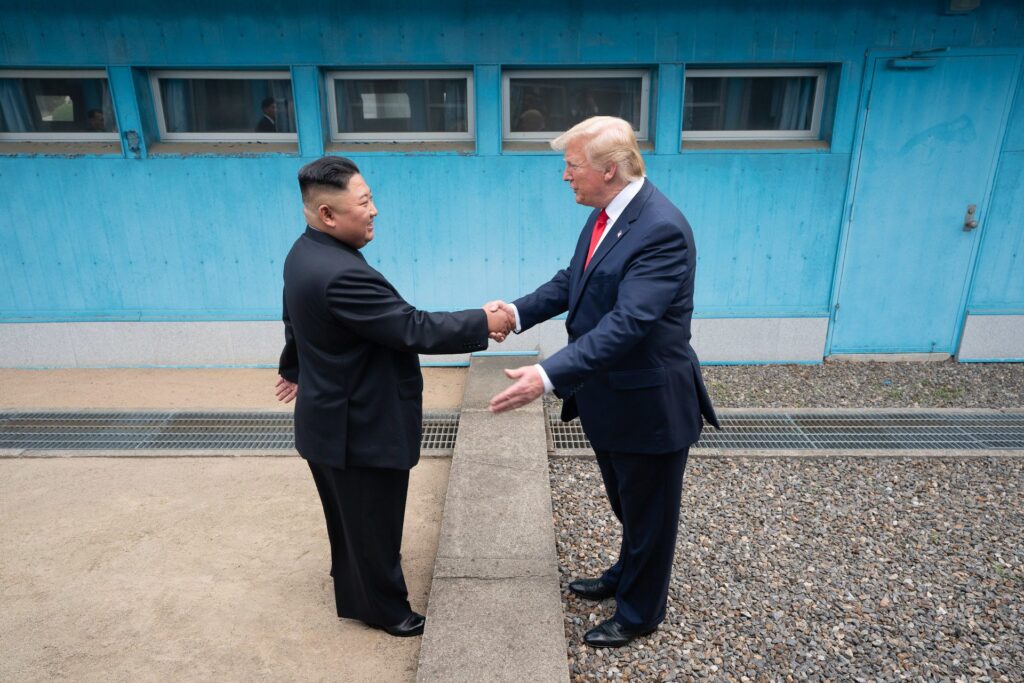
So while Panmunjom is the historic name, the JSA is the beating heart of the truce as it exists today. If you would like to learn more, you can read my post, “History of the JSA explained in 5 minutes,” for a quick overview of how the JSA came to be.
So Why All the Confusion?
If they’re different, why does everyone muddle them up? A few reasons.
For decades, news outlets, films, and even travel guides have used “Panmunjom” and “JSA” interchangeably. When a summit takes place or an incident makes headlines, reporters often say “at Panmunjom” and “at the JSA” in the same breath because the events occur in the same area.
There’s also the historical layer. “Panmunjom” is the older, more storied name tied to 1953, while “JSA” is the more modern, operational term. Both are correct depending on what you’re pointing to, which is exactly why the two blur together so easily. So if you’ve been confused, you’re in very good company.
An Easy Way to Remember It
Here’s the mental picture I give my guests. Imagine Panmunjom as the neighbourhood, and the JSA as the single most famous address on that street. The neighbourhood holds the history and the name, but the JSA is the exact doorstep where the two Koreas actually meet.
Panmunjom is the where. The JSA is the what happens there. Hold onto that, and you’ll never mix them up again.
Can You Visit Either One Right Now?
This is where I have to be honest with you. Following the Travis King incident in July 2023, when a US soldier bolted across the border into North Korea, tours into the JSA have been indefinitely suspended. That means the blue conference rooms and the border line itself are currently off-limits to visitors.
I know that’s disappointing to hear, especially if standing in the JSA was on your bucket list. But it absolutely does not mean the door to this history is closed. Not by a long way.
Come Experience the Joint Security Area With Us
Even with the JSA suspended, you can still step into its story, and this is where I get to share what makes DGO Travel special.
Our DMZ Third Tunnel Tour from Seoul includes the interactive JSA Museum Experience by default, at no extra step or upsell. It’s simply part of the journey with us. And here’s why that matters so much: we have a partnership with the JSA Museum, and we are one of only two tour agencies in all of Korea with exclusive access to it. Inside, you’ll walk through recreated blue conference rooms, hear real wartime sound recordings, and engage with the history in a way no ordinary museum allows.
So now you know the difference. Panmunjom is the historic truce village, the JSA is the secured heart within it, and even while the JSA itself rests behind closed gates, its story is still yours to experience. I’d love to show it to you. Come explore the DMZ with DGO Travel, exclusive JSA Museum Experience included.